

 Facebook
 X
X
 Pinterest
 Copy Link
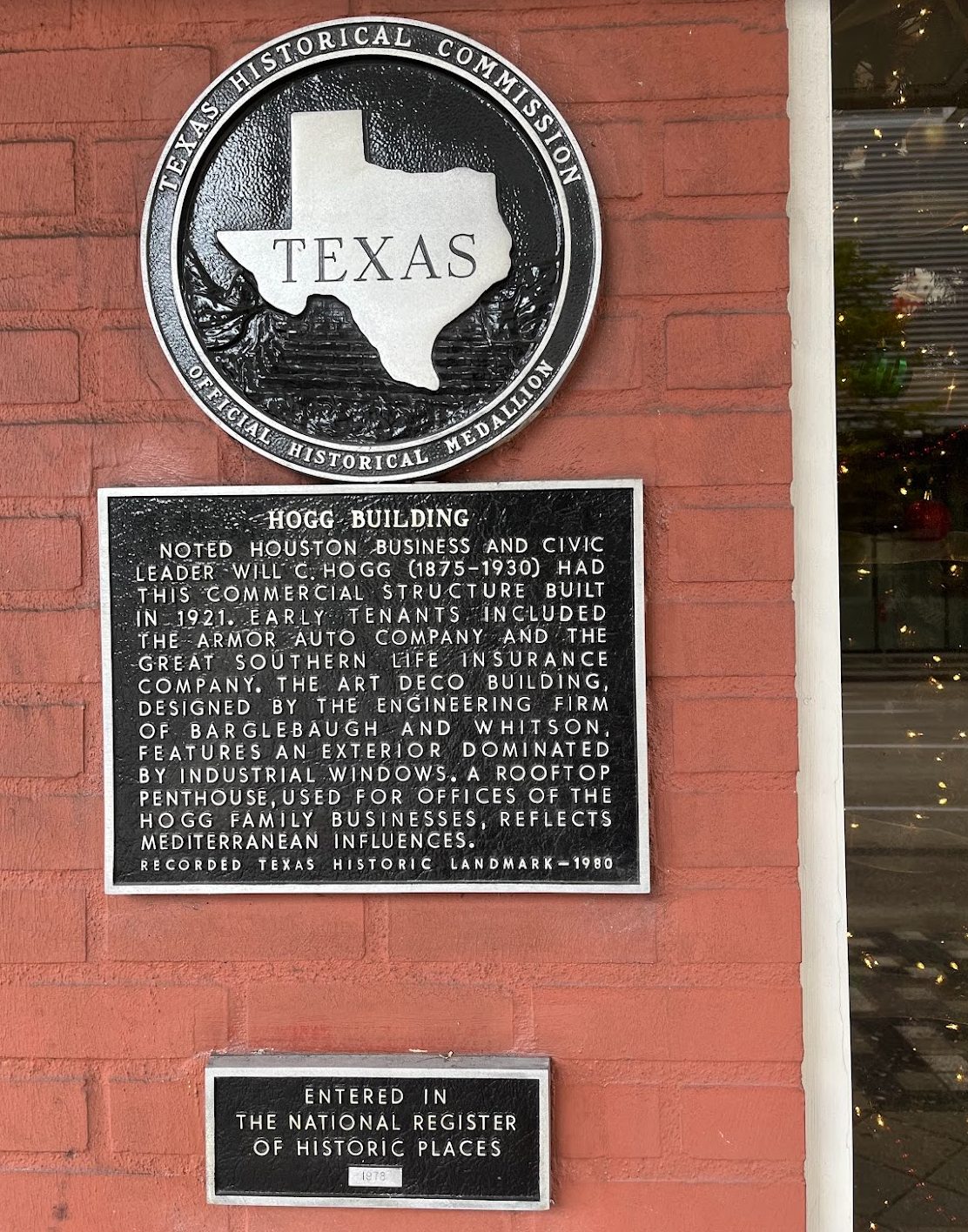
Blending Heritage with Modern Living
Tucked in the heart of Downtown Houston at 401 Louisiana Street, the Hogg Palace, also known as the Hogg Building, is a striking symbol of early 20th-century elegance and urban reinvention.
A Legacy Built in 1921
- Foundation & Namesake
Commissioned by William C. “Will” Hogg, son of former Texas Governor Jim Hogg, the building opened in March 1921 as the “Great Southern Building.” Before that, it was known during development as the Armor Building. - Architectural Vision
Designed by Charles Erwin Barglebaugh and Lloyd R. Whitson of El Paso, the eight-story structure channels a blend of Mediterranean Revival with Sullivan-inspired design. Its exterior is distinguished by sweeping industrial-style windows and ornate detailing at the first and seventh floors. - Prime Real Estate
The ground floor originally showcased automobiles; the upper floors served as office spaces. On the eighth floor, Will Hogg’s private penthouse featured lavish interior spaces—including an oval dining room, living quarters, offices—and lush rooftop gardens. Inside, his collection of Frederick Remington artworks found a dignified home.
Transformations Through Time
- Mid-Century Changes
Acquired by the Pappas Company in 1954, the building underwent renovations in 1963. In 1978, Harvin Moore; Barry Moore Architects restored its facade, removing a slipcover that had concealed its original character. - Adaptive Rebirth
In the early 1990s, developer Randall Davis spearheaded a transformation, converting the structure into 79 upscale loft apartments. By fall 1995, it reopened under the elegant title “Hogg Palace Lofts,” rapidly leasing up.
- Historic Charm Meets Contemporary Comfort
The building carefully preserves its rich Art Deco and Mediterranean flair, retaining high ceilings, decorative stonework, and industrial windows, while offering today’s residents spacious layouts featuring in-unit kitchens, laundry, and live/work flexibility. - Vibrant Locale
Nestled in Houston’s Theater District, the Hogg Palace puts residents steps away from cultural landmarks like Jones Hall and the Alley Theatre, as well as dining hotspots, parks, and urban energy.
Why the Hogg Palace Matters
- Historical Significance – Recognized on the National Register of Historic Places and as a Recorded Texas Historic Landmark, it’s a piece of Houston’s urban heritage.
- Architectural Preservation – The adaptive reuse is a notable case in conservation, retaining original design while accommodating modern amenities.
- Urban Revitalization – Its conversion helped spark Downtown Houston’s renaissance, inspiring more live/work spaces in historic structures.
Final Thoughts
The Hogg Palace stands as a beautiful marriage of past and present, once a luxurious workplace and showroom, now a stylish urban residence. Its story is one of heritage, innovation, and community revival. Whether you’re a history buff, architecture admirer, or urbanite, the Hogg Palace is a shining chapter in Houston’s downtown narrative.
